
FENS care by Prana Sakhi to Balance Work, Parenthood, and Marital Happiness

FENS care by Prana Sakhi to Balance Work, Parenthood, and Marital Happiness Balancing work, parenthood, and marital happiness can be a demanding yet rewarding endeavour. To maintain harmony in these aspects of life, effective communication, time management, and self-care are essential. With a team of experienced clinicians, Prameya Health ensures that women receive holistic care across all four dimensions of health i.e. Functional, Emotional, Nutritional & spiritual through various FENS Prana Sakhi programs, which is an innovative step in well-women care. This program addresses the health needs of women from teenagers to seniors. Clear communication between spouses is crucial for a better understanding of each other. Regularly discussing responsibilities, expectations, and concerns can help prevent misunderstandings and reduce potential conflicts. Ensuring both partners feel heard and supported is key to marital happiness. Then comes effective time management. Creating a well-structured daily routine that accommodates work, parenting, and quality time as a couple can help strike a balance. Prioritizing tasks, setting boundaries, and delegating responsibilities, when possible, can free up valuable time for bonding. Self-care is often overlooked but essential. Both partners need to make time for their interests and well-being to prevent burnout. Whether it’s taking a short break, pursuing hobbies, or seeking support from family and friends, self-care can rejuvenate parents and strengthen the marital bond. Additionally, involving children in age-appropriate tasks can foster a sense of responsibility and lighten the load on parents. It’s also essential to remember that perfection is unattainable, and it’s okay to seek help when needed, such as hiring a babysitter or seeking counselling if marital issues arise. In a nutshell, balancing work, parenthood, and marital happiness requires dedication and effort. Prameya Health is into exclusive women health and hence trains for an open communication, efficient time management, self-care, and flexibility which stands as key ingredients to create a fulfilling and harmonious family life. By prioritizing these elements, couples can navigate the challenges and enjoy the joys of parenthood while maintaining a strong and happy marriage.
How does Menopause Affect Women Wellness

How does Menopause Affect Women Wellness Menopause marks the end of the menstrual cycle in a woman’s life. Women in their menopausal stage experience various symptoms such as irritability, anxiety, frustration, hot flushes, night sweats, urinary incontinence, and tiredness, as well as various other health issues. These symptoms are the result of hormonal changes and can affect women’s wellness both mentally and physically. Menopause and common physical symptoms It is obvious that menopause affects the reproductive system where the ovaries cease to produce eggs, but it also affects bone health where women could be at higher risk of bone density loss. In addition to this, women in the menopausal and postmenopausal stages are also at risk for coronary artery disease. This could be due to low estrogen levels, increased blood pressure, or decreased physical activity. Effect of menopause on mental wellness Hormonal changes can have an emotional impact. They could lead to mood swings, irritability, anger, low self-esteem, and increased emotional sensitivity. There is a high probability that most women tend to experience anxiety and depression. Lack of sleep or disturbed sleep due to menopause-related symptoms can worsen mood disorders and impair cognitive performance, which further aggravates emotional instability. Managing the symptoms of menopause Menopause is a natural process in a woman’s life. Symptoms and changes associated with menopause can be managed with proper support and guidance. Talking to a healthcare provider can be of great benefit during this stage of life. FENS Prana Sakhi by Prameya Health is focused on women wellness to support women in their journey from menarche to menopause and post-menopause, supporting them in functional, emotional, nutrition, and spiritual dimensions.
Menopause and its Impact on Relationship

Menopause and its Impact on Relationship A woman goes through various physical and mental changes from the onset of menarche (the first menstrual cycle) to menopause (cease of menstrual cycle). They are a natural phase of every woman’s life and are inevitable. While menarche marks the beginning of a woman’s reproductive years, menopause marks the end. Menopause typically occurs in the late 40s or early 50s. The physical symptoms associated with menopause are noticeable, but the emotional and psychological symptoms that impact relationships usually go unnoticed and are often not discussed. However, it is crucial that these symptoms be addressed in order to maintain a healthy relationship. Physical Symptoms of Menopause The physical symptoms of menopause are one of the main ways it can affect relationships. Most common symptoms experienced during menopause include hot flashes, night sweats, and sleep disruptions, which can disturb general comfort and sleep. This tends to make women irritable and fatigued, which could result in not being able to be available to the needs of the family. Lack of sleep and increased irritability can impact the mental well-being of women, thus impacting relationships. Even partners might struggle to comprehend this transformation, making it challenging for them to understand and respond to the altered behavior of their loved one. Impact of menopause on sexual well-being Menopause can also have an impact on sexual intimacy. Most women tend to experience a decrease in libido due to hormonal changes during menopause. This is sometimes difficult for the spouse to accept and often results in discord and disturbance in the relationship. However, it is important to note that it is at this phase of life that a woman needs the support of her spouse the most. Women’s sexual drive may decline as a result of the discomfort they feel during sexual activity. Relationship stress may increase as a result of partners’ inability to comprehend these changes and their feelings of rejection or frustration. Partner Support for Emotional Stability One of the main impacts that menopause has on relationships is emotional shifts. Most women tend to experience anxiety, anger outbursts, sadness, and mood swings due to hormonal changes. These changes are difficult to accept by both partners. It is important for the male counterpart to understand that these changes are beyond a woman’s control and that they often seek support and patience during this phase.Discussing these changes with the partner can help resolve issues that can harm the relationship. An open conversation can help the partner understand what a woman is going through and bridge the gap between the physical and emotional changes associated with menopause. It is important for women to express their feelings and equally important for men to be their strongest support system in navigating this phase of life together. Additionally, some women might also begin to develop feelings of low self-esteem, hopelessness and worthlessness as they transition from reproductive years to menopause. These feelings can lead to decreased interaction with their partners. It is at this critical juncture that partners can support them by reassuring their worth and appreciating the growth that accompanies menopause. Expert guidance and care Women can also help themselves deal with these natural changes and manage menopause in a very graceful manner by consulting experts like Prameya Health. Prana Sakhi by Prameya Health offers FENS (Functional, Emotional, Nutrition, and Spiritual) support to women through various stages of life. The program is designed to meet the unique needs of women and help them navigate through the journey of womanhood with ease.
Sahai Program

Sahai Program Cancer not only affects the body, but also the mind and the spirit. It brings a lot of emotional change. It’s a hard journey that needs strong support. The FENS Sahai Cancer Support Program by Prameya Health is a ray of hope for those navigating the difficult terrain of cancer. It offers holistic care in all dimensions namely functional, emotional, nutritional, and spiritual (FENS).Within its functional aspect, the program emphasizes healing and restoration via specific therapies including yoga, exercise, and lymphedema care. Targeted care is provided for lymphedema, a common side effect of cancer treatment, to increase mobility and improve overall quality of life. Incorporating yoga and exercise promotes physical healing while giving participants a sense of empowerment as they regain control over their bodies.The program addresses the psychological effects of cancer. Feelings of anxiety, guilt, regret, despair, and others are very common following the diagnosis of cancer. FENS Sahai Program provides support by offering individual counseling provided by licensed psychologists and counselors, who give a secure environment to share their feelings and find strength in the community. The program not only provides motivation and counseling, but also helps with grooming and usage of prosthesis and wigs, thus returning to a normal quality of life. Personalized dietary advice is part of the program’s nutritional support, which recognizes the critical role nutrition plays in supporting the body before, during, and after cancer therapies. Dieticians collaborate closely with patients to create meal plans that are specific to their requirements and ensure they get the nutrients they need to be as healthy as possible. Keeping the spirits high is very challenging throughout the cancer journey. FENS Sahai program incorporates dance, music, art, and meditation into its program to address the spiritual dimension. With these activities, individuals can express themselves and find a connection to their inner strength, which helps in their spiritual well-being. The FENS Sahai Cancer Support Program aims to offer a comprehensive support system by integrating all four aspects, promoting not only physical recovery but also emotional resilience, nutritional well-being, and spiritual enrichment for cancer patients.
Cultivating Mindfulness and a Sense of Calm during Menopause

Cultivating Mindfulness and a Sense of Calm during Menopause The transformation that a woman goes through during menopause is associated with a host of emotional and physical changes. These changes often require dedicated efforts to manage them. One of the best practices to navigate through this change smoothly is to practice mindfulness and develop a sense of calm.Most women find it challenging to deal with these changes on their own. It is therefore advisable that they talk to experts and explore the approaches to managing the symptoms associated with menopause. Programs such as FENS Prana Sakhi by Prameya Health are focused on women’s wellness supporting women through various stages of life. Mindful practices such as meditation and deep breathing exercises that are a part of the program serve as useful tools that help the mental well-being of women.Including yoga in the daily routine can be of great help to women going through their menopause. Yoga helps connect the body and the mind and also enhances physical flexibility. Different yoga postures combined with breathing help in stress reduction, thus promoting a sense of calm. Understanding the right yoga postures that help with menopausal symptoms is crucial. FENS Prana Sakhi includes yoga sessions both online and offline that guide women with mindful yoga to support the physical as well as mental health of women in their menopausal stage. Moreover, creating a supportive environment that includes open communication with loved ones and healthcare professionals is vital. By acknowledging the emotional aspects of menopause and seeking assistance when needed, women can embark on this transformative journey with resilience and a cultivated sense of mindfulness, promoting a smoother transition and a greater sense of inner peace.
Myths & Facts about Menopause

Myths & Facts about Menopause Menopause, which usually happens in a woman’s late 40s or early 50s, is a normal biological process that signifies the end of her reproductive years. Confusion and misunderstandings can arise from false information on life transitions such as menopause, which makes it difficult to approach new phases with confidence. Pranasakhi program from Prameya Health debunks all the myths surrounding menopause and helps you successfully navigate this important transition in life. So, let’s look at the myths and facts surrounding this transitional phase in women’s lives. Menopause occurs unexpectedly: Menopause is a gradual and long-term process where a woman experiences 12 consecutive months without a menstrual period. Hormone fluctuations cause a range of symptoms throughout the perimenopause, the preceding period up to menopause, which can extend for several years. Same symptoms for all women: Menopause symptoms might differ considerably from woman to woman. Some people may go through it with little discomfort, but others may suffer from a variety of symptoms, such as mood swings, hot flashes, night sweats, and libido changes. The diversity of experiences can be attributed to lifestyle choices, genetics, and general health. Women’s reproductive system is solely impacted: Menopause can impact various aspects of a woman’s health beyond the reproductive system. Hormonal changes during menopause can raise the risk of osteoporosis and impair cardiovascular health, metabolism, and skin elasticity. Weight gain is unavoidable during menopause: Although hormonal changes may play a role in weight gain, it is not the same for everybody. Maintaining a balanced diet and engaging in regular exercise helps in weight management and lowers the chance of developing further menopausal health problems. HRT (Hormone replacement therapy) is the sole treatment for menopausal symptoms: Menopausal symptoms can be effectively managed with HRT, but it’s not the only treatment available. Lifestyle changes such as eating a balanced diet, regular exercise, and controlling stress, help in reducing the symptoms. Furthermore, some women find relief through alternative therapies and non-hormonal drugs. Less sexual desire occurs after menopause: Hormonal fluctuations may impact desire in some women, but this is not a common occurrence. The dynamics of relationships, general health, and mental well-being are all important factors that influence sexual desire both during and after menopause. Thus, comprehending the myths and realities surrounding menopause is crucial for women. It promotes a more knowledgeable and encouraging attitude by eliminating misunderstandings and valuing personal experiences. Pranasakhi program from Prameya Health helps women deal with menopausal challenges efficiently with a holistic approach.
Societal Impact during Menopause
Societal Impact during Menopause Menopause usually occurs in a woman’s late 40s or early 50s and is a normal biological process that signifies the end of her reproductive years. It’s a twelve-month period after a woman’s last menstrual cycle and involves significant changes in both her physical and mental health. Menopause is a nearly twenty-year transitional period characterized by significant hormonal drop, often exacerbated by social and cultural stigma for women.Menopause has a complex social influence on women, impacting not just themselves but also their families, jobs, and communities. It is a period of significant physical and emotional changes for women, necessitating societal awareness and support to help them navigate and overcome challenges. Hot flashes, irregular periods, night sweats, decreased sex drive, depression, anxiety, and sleep issues are some of the symptoms of menopause. Research studies indicate that the experience of menopause varies among cultures. Women who view menopause positively are reporting fewer and less severe symptoms than those linked to ageing. Prameya Health offers a Prana Sakhi program that helps address the menopausal impact on society. The program/initiative seeks to empower women during this pivotal moment by providing comprehensive support, education, and resources. Utilizing community involvement and education campaigns, Prana Sakhi cultivates a climate that promotes candid discussions on menopause, diminishing stigma and promoting awareness. Consequently, this leads to the development of a more accommodating society structure that acknowledges and meets the particular requirements of women undergoing menopause. Hence, menopause has an impact on society that goes beyond personal experiences to influence the community’s overall well-being. Programs like Prana Sakhi from Prameya Health promote awareness, understanding, and support for women to navigate this process with resilience and empowerment.
Early Signs of Menopause and Coping up with Changes
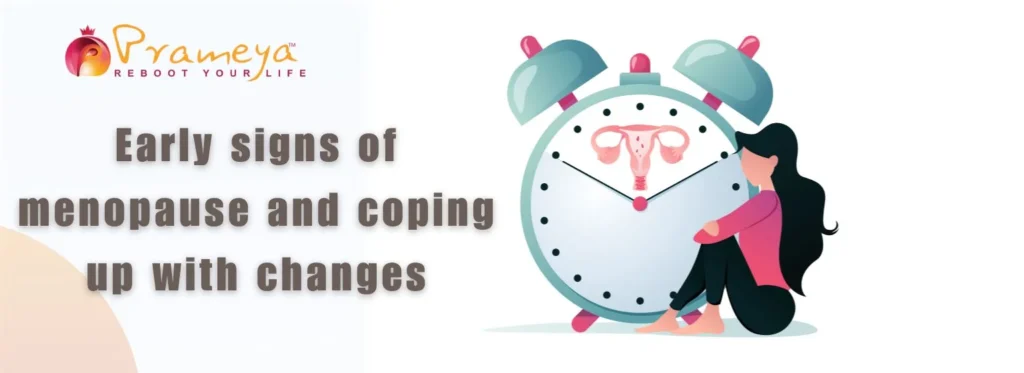
Early Signs of Menopause and Coping up with Changes Menopause is a significant life transitioning phase for most women. It commonly occurs for women in their late 30s to mid 40s and early 50s. Early signs of menopause can manifest in a variety of ways, both physically and emotionally. This change is associated with many symptoms, some of them occurring as early signs that signal the onset of menopause. Early Signs of Menopause Most women tend to panic when they observe they have missed their periods for a couple of months and then suddenly occur. These irregular menstrual cycles are the primary indicators of menopause and are a natural process indicating the gradual decline in reproductive hormones like estrogen and progesterone. It is also observed that nearly 75% of women in the perimenopause stage experience sudden, periodic increases in body temperature. These are called hot flashes or hot flushes and usually tend to occur before a woman’s last period. In addition to the above, women experience other symptoms such as night sweats, sleep disturbances, anxiety, irritability, low self-esteem, tiredness, and many others that might seem difficult to manage. Thankfully, Prana Sakhi by Prameya Health is aimed at empowering women by supporting them in the functional, emotional, nutritional, and spiritual dimensions, thus motivating them to lead a healthier and happier life. Prana Sakhi helps women understand that menopause is a natural phase of life and not a medical condition, and this will help women approach it with a positive mindset. The program is a holistic approach that includes yoga, dietary advice, addressing health issues and routine screenings. This approach enables women to cope up with the changes gracefully and have a smooth transition to menopause.
Exercise and Menopause: Maintaining Physical Well-being

Exercise and Menopause: Maintaining Physical Well-being A woman’s natural menstrual cycle ends during menopause, which usually happens in her late 40s or early 50s. For women to successfully manage the challenges of menopause, a normal ageing process marked by physical and hormonal changes, they must maintain physical well-being and engage in regular exercise. Prameya Health guides women with various exercises and yoga through its FENS (Functional, Emotional, Nutritional, Spiritual) Prana Sakhi program to navigate the menopausal phase efficiently. Since hormonal changes during menopause frequently result in weight gain, particularly in the abdomen, exercise significantly helps weight management at this time. Regular exercising helps maintain weight, burn calories, and prevent obesity-related illnesses. It also keeps muscle mass intact, which decreases with age. Additionally, exercise impacts mood and mental health significantly. Menopause can present emotional challenges such as mood swings and increased stress and anxiety susceptibility. Physical activity boosts endorphins, “feel-good” hormones, which alleviate mood disturbances and promote well-being, especially during menopause when hormonal imbalances may cause emotional fluctuations. Exercise improves bone health, reducing osteoporosis risk, especially post-menopause due to decreased estrogen levels. Weight-bearing exercises like walking and resistance training help maintain bone density and reduce the risk of fractures. Physical exercise like brisk walking, swimming or cycling during menopause can enhance cardiovascular health, as estrogen decline is linked to an increased risk of heart disease. Physical exercises are necessary during menopause. However, women should pick activities that suit their fitness levels. It is advisable to consult doctors and follow a balanced fitness regimen. Prameya Health’s FENS Prana Sakhi program offers a comprehensive approach to help women navigate their transformative phase, empowering them to embrace change and lead healthier, more fulfilling lives.
Mind-Body Connection: Nurturing the Spirit during Menopause

Mind-Body Connection: Nurturing the Spirit during Menopause Menopause is often seen as a physical end to a woman’s reproductive years, with the phase ranging from 4 to 10 years. It is a complex process encompassing significant body, mind, and spirit change. Menopause highlights the interdependence of mental, emotional, and physical well-being. It is important to understand and foster the mind-body connection as women negotiate physical and emotional changes. Here is where the FENS ( Functional, Emotional, Nutritional, Spiritual) Prana Sakhi program from Prameya Health helps women tackle the challenges during the menopausal phase. Firstly, developing a positive mindset is necessary. Women can learn to manage stress, develop inner calm, and focus on themselves through mindfulness exercises like yoga, meditation, and deep breathing. These techniques help women develop acceptance and self-compassion by observing their thoughts and feelings without being judgmental. During menopause, self-care is crucial for nurturing the spirit. To honour the body and individual needs, nourishing with nutritious food, staying hydrated, and regular physical activity is advised. In addition, engaging in hobbies or relaxation practices like massage or aromatherapy can offer much-needed solace and rejuvenation. Also, support from loved ones or support groups offers women a sense of community and validation during the transitional phase. Sharing experiences, emotions, and coping strategies can strengthen connections and resilience. In essence, nurturing the spirit during menopause involves embracing the mind-body connection, practising self-compassion, prioritizing self-care, and seeking support to navigate this transformative journey with grace and resilience. For any help, reach out to Prameya Health, for we help women overcome menopause challenges easily through our FENS Prana Sakhi program.

